
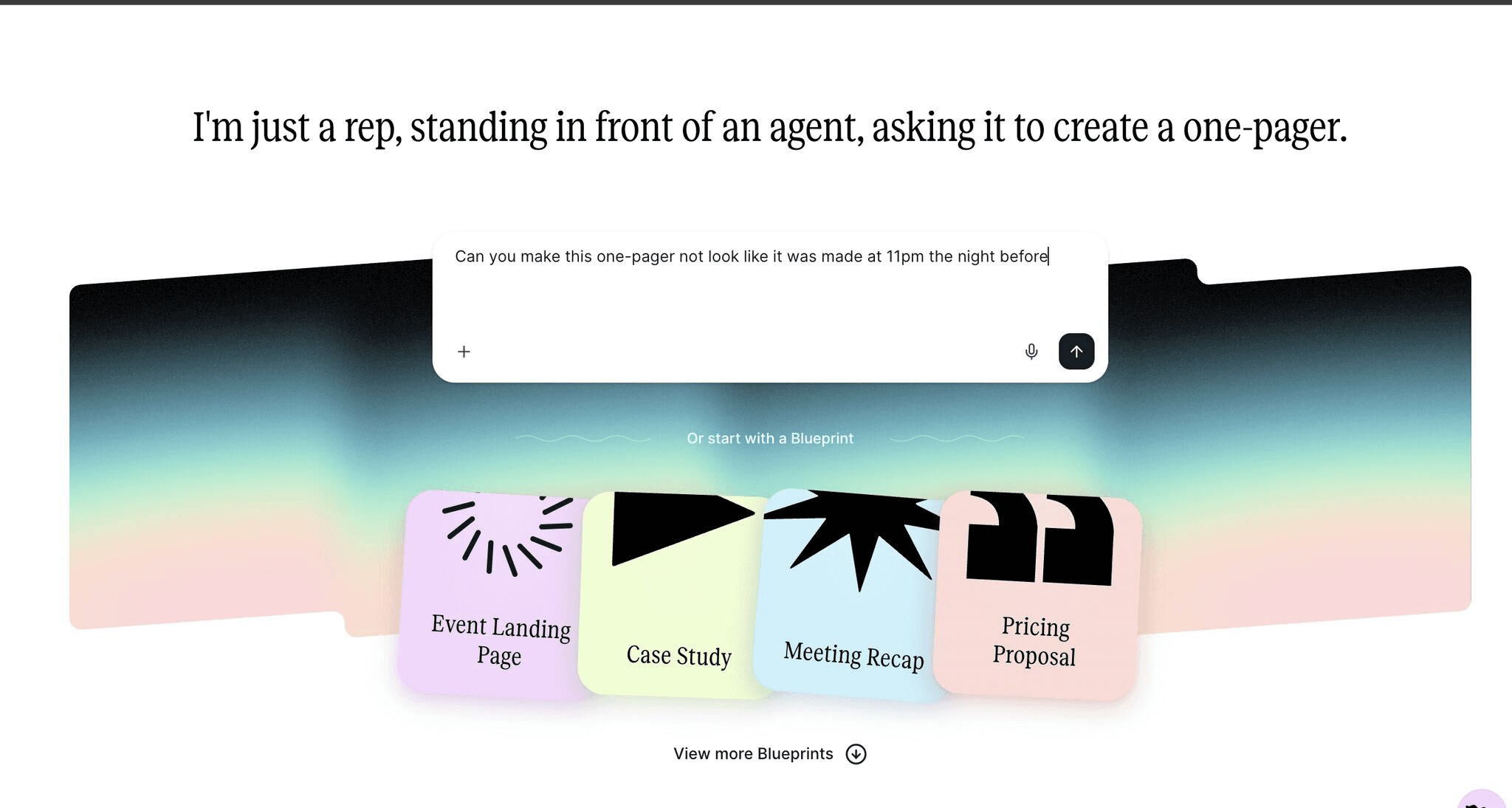
One of the most underrated benefits of building an agentic product is that users just tell you what they want.
This sounds obvious until you remember how hard this used to be. For most of my career, understanding user intent meant stitching together session replays, engagement data, and the occasional user interview. You could talk to some of your users, never all of them.
With an agent, that changes completely. Every session is essentially a user telling you, in plain language, exactly what they were hoping to do. At Mutiny we use Braintrust to review hundreds of these traces every week, and it's become one of the most valuable rituals we have as a product team.
Two things surface consistently. The first is frustration. Here's a trace from last week:
User: "Make the headline bigger and move the logo to its own line."
Agent: Moving the logo and making the headline bigger
User: "The sizing is still broken, text is overflowing into the other box. Fix it."
Most of users will never file a ticket or send an email to support. So being able to see their frustration, improve the software and let them know is a magic workflow.
The second thing is more interesting. Two hours after we shipped Mutiny's new agent, I opened Braintrust and kept seeing the same kind of request: users asking the agent to turn their content into a slide deck. Over and over. Something we didn't support. They weren't filing feature requests, they were just trying it, assuming it would work.
When users repeatedly attempt something that doesn't exist, that's a roadmap. The best product ideas often come from users, not from us. Building with agents has made that more literal than I expected.