
Challenge
Delivering a premium client experience without a large brand or design team
Basten Heutink joined Delphi as Chief of Staff with a mandate that cut across two distinct challenges: keeping Delphi at the edge of AI-native operations, and ensuring the company's external-facing work lived up to the premium product it was selling. For a platform that serves high-profile customers, "fine" wasn't a standard the team could afford.
Delphi's go-to-market team, led by Basten and Andrew (Head of Operations), was responsible for for delivering a premium buying experience that matched the caliber of creators Delphi serves. To deliver this sales experience, the team needed to figure out a way to deliver personalized proposals, business cases, and follow ups to steer where things were headed. The kind of materials that make a prospect feel valued, heard, and understood.
The problem was that creating those materials the right way was slow, manual, and repetitive.
In practice, the bottleneck showed up in three specific ways:
1. Custom landing pages for their prospects required hours in Figma and Framer, plus experts in each tool to execute
When the team needed a branded, polished asset, the options were: spend two to three hours in Figma doing it yourself or take someone off design to help. Losing three or four hours mocking up a landing page wasn’t something the team was worth sinking time into. And relying on designers who had a product roadmap to support meant the team was competing against higher-priority work for every client deliverable.
The result: most personalized assets simply didn't get made.
2. Generic documents undersold a premium product.
Delphi's brand is design-forward. But when follow-up materials looked like a generic PDF or a bulleted Google Doc, the gap between the product experience and the sales experience was jarring. For a company whose customers and prospects include some of the most recognized names in the creator economy, showing up with generic materials wasn't acceptable.
3. A new category of assets existed on the whiteboard but never in production.
There was a whole tier of client touchpoints the team wanted to create, including personalized landing pages for each joint webinar, custom event pages for campaigns, and after-action reports for creator partners, that simply went unmade because the effort wasn't justifiable. The ideas existed. The execution bottleneck killed them before they started.
"Mutiny unlocked new capabilities for us, which I think is a characteristic of the best AI tools. The ones that can actually allow you to do new things." — Basten Heutink, Chief of Staff, Delphi
Solution
From docs to polished, on-brand deliverables in minutes
Delphi evaluated a range of AI tools before landing on Mutiny. The pattern was consistent: tools like Gamma and Claude Cowork could get the team to roughly 75 percent, but not presentable. Getting the rest of the way required many iterations and manual corrections that the time savings evaporated.
Mutiny was different. Basten put in Delphi's website, and without any additional setup, the platform extracted the brand identity, including fonts, colors, logo, and visual style, automatically. For someone skeptical of what AI tools actually apply brand, the output surprised him: "This actually... this looks great?”, he reacted.
Within his first session, Basten had polished, client-ready assets. The team has since deployed Mutiny across several core workflows:
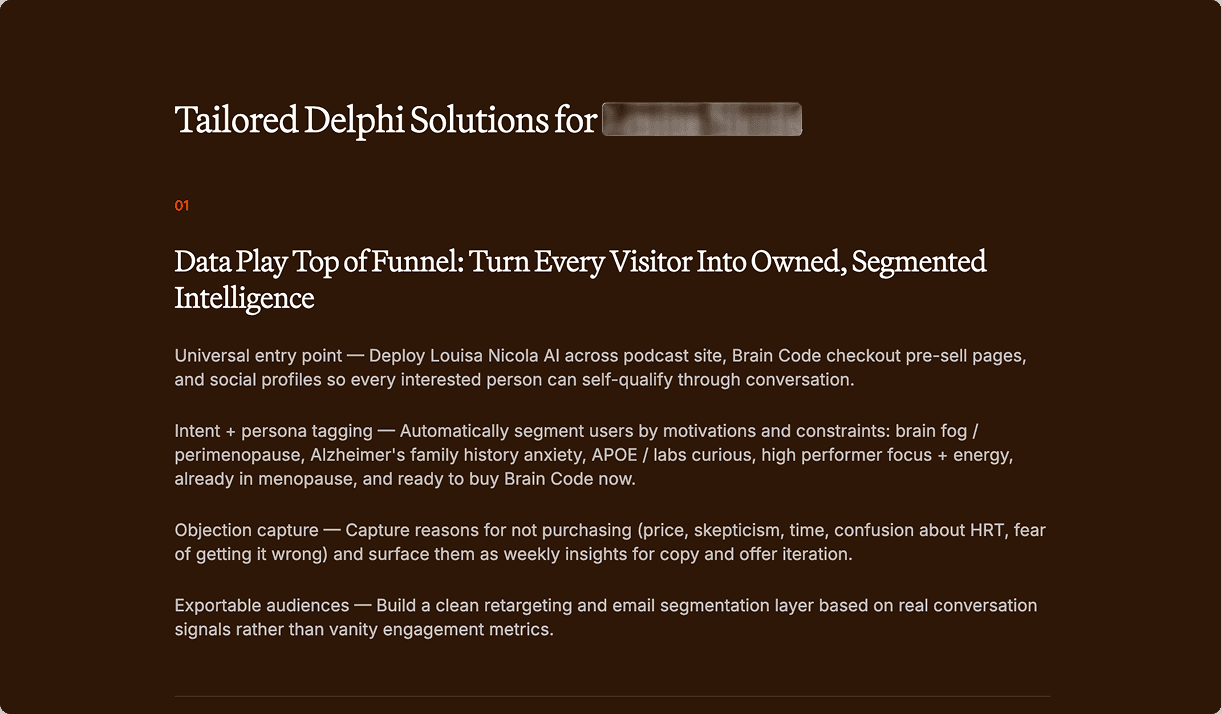
1. Personalized proposals and business cases for creator partners:
Andrew, Head of Creator Partnerships, runs the day-to-day relationship with Delphi's top tier creators, coaches, personalities, and experts. Rather than a Notion doc or a generic email summary, Andrew now generates branded follow ups covering what was discussed, how Delphi would work for this specific creator, and what their unique engagement would look like. The workflow: pull the content from Notion, describe what's needed, and Mutiny generates a polished deliverable that matches Delphi's visual identity.
2. Event and webinar landing pages for creator partnership amplification:
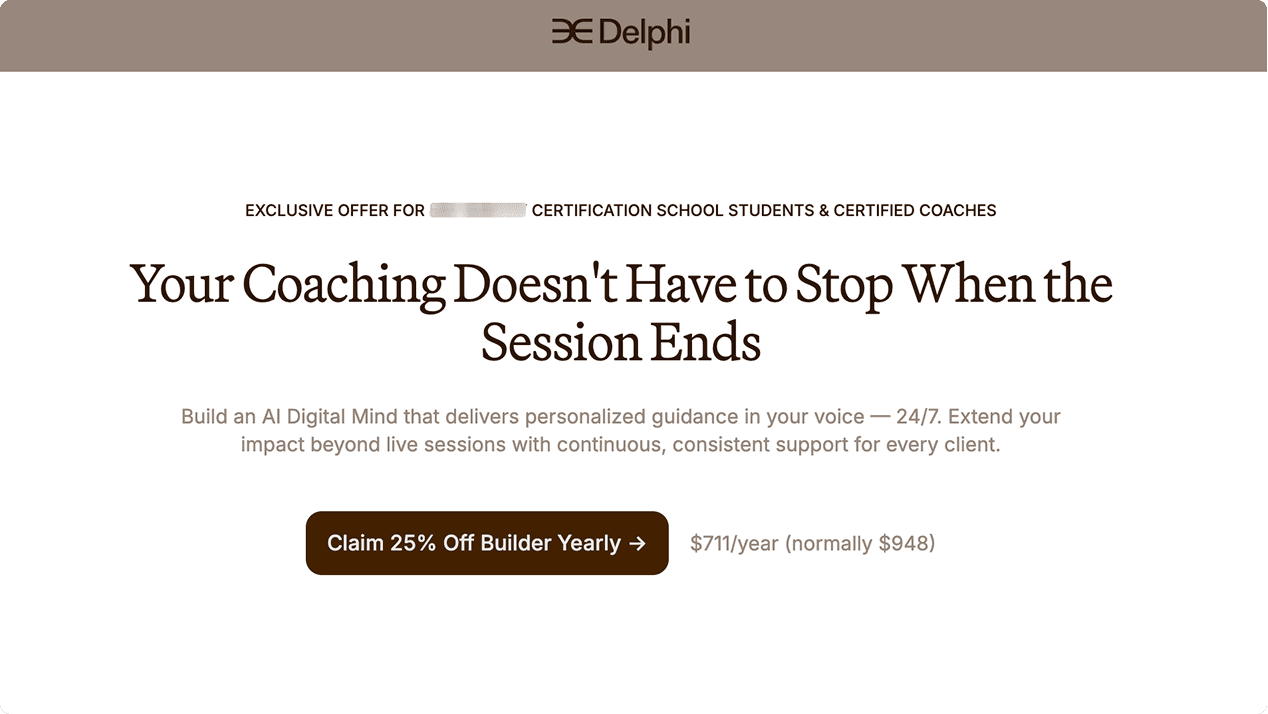
Delphi partnered with a high profile creator’s team on a webinar, the kind of event that deserved more than an email and calendar invite. The team built a custom event landing page in Mutiny for the campaign. It was one of the highest-attended webinars the coaching program had ever run. While the success of the event is not fully attributable to Mutiny, Basten notes, “the event page was something the team would have simply skipped before Mutiny.” Now, the ops and sales team can execute ideas that used to sit in design and dev backlog.
3. After-action reports and launch recaps for creators:
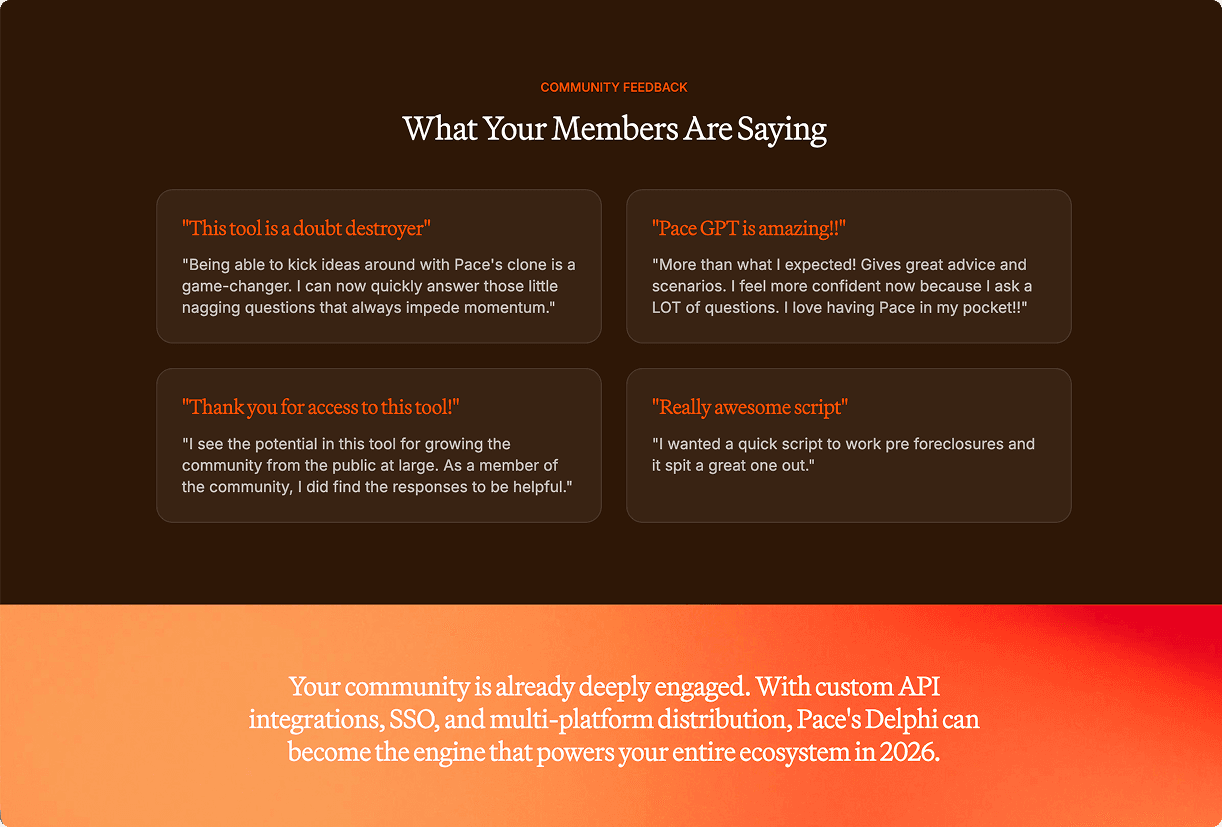
When a creator goes live with their Delphi clone or hits a milestone, the team now produces a branded recap covering what happened, what performed, and what comes next, as a polished page rather than an un-styled PDF. These assets serve a dual purpose: they make the creator feel like a valued partner, and they reinforce Delphi's identity as a premium product at every client touchpoint.
"I simply put in our website and all of a sudden I was like, wait, this actually looks great. And it's something we present to clients." — Basten Heutink, Chief of Staff, Delphi
Outcome
A premium sales and customer experience, created by sellers and operators, not designers
What used to take two to three hours in Figma now takes roughly three minutes in Mutiny. For a team trying to keep up with inbound demand every week, Basten says they could be saving up to 20 hours a week which allows them to handle more sales capacity.
The time savings are real, but the deeper unlock is capability. Mutiny gave Delphi's team an entirely new category of work they simply couldn't justify before. Webinars get a landing page. Creator partners get launch recaps. Sales calls get personalized, on-brand follow-up that looks like it came from a design team.
Delphi sells a premium product to some of the most recognizable names in the creator economy. The external materials are now as premium and polished as Delphi’s product experience. With Mutiny, every touchpoint reflects the same high bar.
Looking Forward
Basten's vision is an automated pipeline: a sales call transcript is logged, an agent identifies it as a client proposal opportunity, and a Mutiny asset is generated without anyone having to initiate it. Basten could focus on the call itself, and the proposal would appear in Mutiny, ready to review and send, before the prospect's next internal meeting.
The trigger for that shift is an MCP integration that would let external agents hand off to Mutiny directly. When that exists, Basten sees the volume of personalized assets scaling dramatically, not because the team grew, but because the pipeline became autonomous.
"Our bar isn't 75%. It's 110%. When you find a tool that gets you there faster without lowering the standard, that's where it gets exciting." — Basten Heutink, Chief of Staff at Delphi